

What challenges do immigrants face in the US?

Moving to the United States can be exciting, intimidating, and confusing all at once, but beyond culture shock, many newcomers discover broader, systemic realities that shape daily life.
So, what challenges do immigrants face when starting over in the United States? The answer goes far beyond simply adjusting to new customs.
Many immigrants encounter language barriers, employment hurdles, complex paperwork, healthcare access barriers, and social isolation—common experiences tied to navigating a new, unfamiliar environment.
For instance, according to research2 published by BMC Psychology, the adjustment process affects international students across all backgrounds, causing feelings of anxiety, confusion, and uncertainty as they navigate unfamiliar territory.
Building a stable life in the U.S. is not easy and takes time, but these difficulties are normal, and they’re not your fault. With the right strategies, resources, and support systems, you can overcome them and build the life you came here for.
Why most immigrants face challenges
The challenges immigrants face in the U.S. aren’t random. They’re the result of systemic barriers that affect how newcomers access essential services, find work, navigate legal processes, and integrate into communities. Research from the National Academies3 shows that immigrants often encounter obstacles in major social institutions like schools, workplaces, and healthcare systems that native-born Americans don’t face.
In addition, immigration policy itself adds complexity. According to the Migration Policy Institute4, the U.S. immigration system includes multiple visa categories, varying eligibility requirements, and waiting periods that can affect stability for years.
Because of these overlapping systems, the challenges immigrants face are often structural rather than individual. Recognizing this helps remove the unnecessary self-blame many immigrants feel.
Language and communication barriers
Language is one of the most immediate challenges immigrants face in the U.S.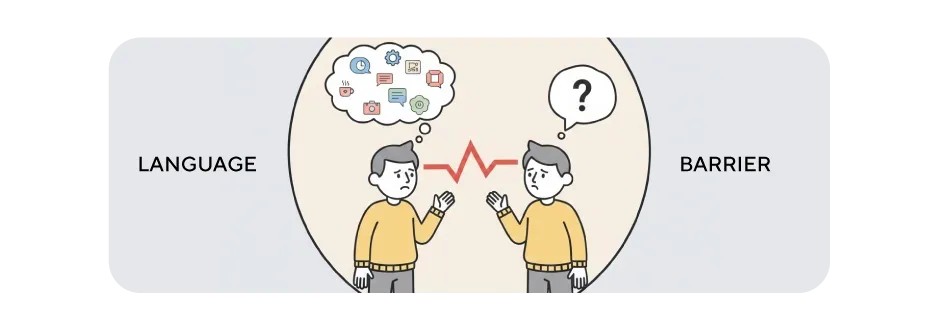 Even if you speak English, accents, regional slang, workplace terminology, and bureaucratic language can create misunderstandings. Language barriers can affect employment, healthcare access, legal paperwork, and even everyday interactions like renting an apartment. According to research5 published in the Inquiries Journal, language ability can influence a person’s level of cultural stress and is closely tied to the success of their adaptation.
Communication differences extend beyond vocabulary. In the U.S., communication tends to be direct and explicit. As USAHello explains6, Americans often say what they mean plainly rather than relying on indirect communication to avoid misunderstandings. If you’re from a culture that values indirect communication to preserve harmony, this directness might initially seem rude, but it’s usually not intended that way.
Differences can also extend to:
often emphasize individualism and personal achievement. According to the Immigrant Support Center7, Americans tend to value self-reliance and personal responsibility. If you come from a more collectivist culture where family and community decisions are paramount, this can feel isolating at first.
emphasizes productivity, punctuality, clear communication, work-life balance, and individual achievement.
American service workers often greet customers with enthusiasm, make small talk, and expect tips (typically 15–20% in restaurants).
within the U.S. means your experience will vary significantly. According to research by Nancy Foner et al.8, the U.S. has become increasingly diverse, with immigrants and their children making up more than a quarter of the population.
Employment and financial challenges
One of the most significant problems immigrants face involves economic stability. Research from the National Employment Law Project shows that in February 2023, the unemployment rate among foreign-born workers was 4.7%9 compared to 4.0% for US-born workers, with the high unemployment rate among immigrants brought about by barriers to employment. 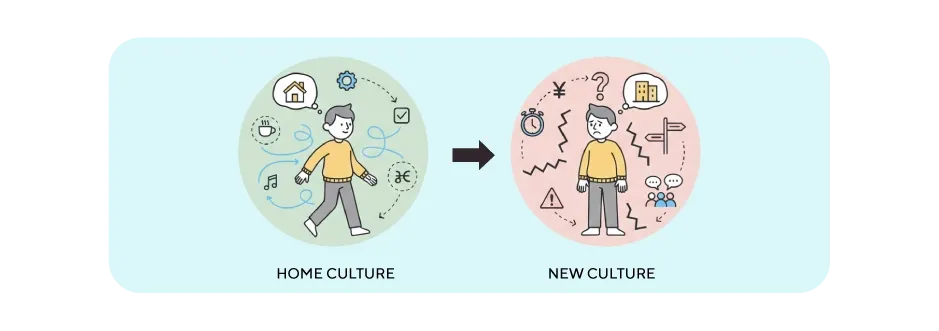
Common employment challenges immigrants face include:
Highly educated immigrants may work in low-skilled positions while waiting for credentials to transfer. For many immigrants, finding work that matches their skills and education level is one of the most frustrating challenges. According to the Ballard Brief, over 2 million highly skilled immigrants10 in the U.S. are either underemployed or unemployed due to systemic hurdles that impact career advancement, like their legal status and language barrier.
Professional licenses and academic degrees may require additional certification or exams in the U.S., which means your degrees or professional licenses from other countries may not be accepted in the United States. A qualified engineer might need to retake exams, or a doctor might face additional training — all while struggling to pay bills.
Without local experience, immigrants may accept lower-paying positions initially.
The U.S. financial system relies heavily on credit scores. Without one, renting housing, obtaining loans, or qualifying for certain services can be more difficult.
Legal and documentation stress
Another major answer to the question “what do immigrants struggle with?” is legal uncertainty.
Visa applications, renewals, green card processing, and naturalization procedures involve extensive paperwork and waiting periods.
Common stressors include:
- Complex forms and documentation requirements
- Long waiting periods
- Fear of making mistakes
- Concerns about policy changes
For some immigrants, legal status uncertainty can affect employment, travel, and long-term planning.
Healthcare system difficulties
Navigating the U.S. healthcare system is one of the major problems immigrants face in the U.S.
Insurance confusion alone creates massive barriers. According to the KFF, about 50% of undocumented immigrant12 adults remain uninsured, compared to 6% of naturalized citizens and 8% of US-born adults as of 2023.
Another study13 found that the health advantage immigrants arrive with deteriorates the longer they stay in their host countries due to limited language proficiency, resulting in delayed access to healthcare services and a lack of effective communication between them and their healthcare providers.
Common healthcare challenges include:
- Confusion about insurance options
- High out-of-pocket costs
- Limited eligibility depending on immigration status
- Difficulty understanding medical terminology
Accessing care presents additional barriers. Per the KFF14, healthcare-related challenges are more pronounced for some immigrant groups, especially undocumented immigrants, who grapple with lower incomes and language proficiency. Noncitizens may also have limited or restricted eligibility for federal healthcare coverage.
Social isolation and homesickness
Beyond structural barriers, immigrants often struggle socially.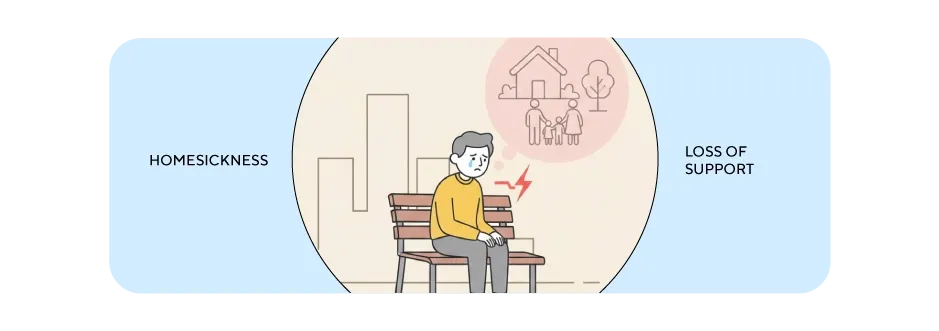
Leaving behind family, friends, and familiar routines creates emotional strain. Social isolation is especially common during the first year of relocation.
A 2022 study15 has shown that ample social support is associated with a lower risk of acculturative stress and helps with better integration. However, building new relationships takes time, and cultural differences can slow that process.
Research16 also shows that cultural adjustment becomes more difficult when people feel socially isolated or lack reliable ways to communicate with loved ones.
Homesickness can also intensify during holidays or stressful moments, where you idealize your home country, remembering only the good parts and forgetting the challenges you faced there.
This emotional pull is normal. Over time, as you establish routines and form new relationships, the feeling becomes easier to manage.
Mental and emotional challenges
Aside from homesickness, you may notice other symptoms that come with adjusting to a new culture as an immigrant, which may include:
Small inconveniences feel magnified. Waiting in line, navigating public transportation, or trying to understand a new bureaucratic system can trigger disproportionate frustration.
Even in crowded spaces, you might feel profoundly alone. Building genuine connections takes time, and the absence of familiar relationships leaves a void.
Not knowing the right way to do things creates constant low-level stress. You second-guess yourself and worry about making social mistakes.
Engaging with the new culture feels exhausting, so you retreat or only socialize with people from your home country.
Everything in your new country seems worse than back home. The food, the weather, the people — nothing measures up.
Culture shock can manifest physically through sleep disturbances, fatigue, digestive issues, minor illnesses, and feeling “off.”
Everyone experiences these symptoms to different degrees. Some people sail through with minor discomfort; others struggle significantly. Neither response is wrong. It’s simply how your particular mind and body process major life transitions.
Discrimination and cultural differences
Another reality many immigrants encounter involves discrimination or cultural misunderstanding.
According to a study17 published in Advances in Medical Sociology, experiences of discrimination are linked to increased stress and poorer physical and mental health outcomes among immigrant populations. Immigrants also have to deal with unfamiliar social norms, including personal space, politeness, different values, or humor, which vary significantly across American regions and communities.
How to overcome immigrant challenges
Learning how to deal with a new culture takes time, but practical steps can make the process smoother. Helpful strategies for adapting include:
You don’t need to master everything at once, but understanding fundamental customs helps you avoid major missteps. How do people greet each other? What’s expected regarding punctuality? Observation is your friend, and it’s a good practice to watch what locals do and follow their lead.
Even basic proficiency makes an enormous difference. Take classes, use apps, practice with native speakers, and don’t be afraid to make mistakes.
When you encounter something that seems strange, pause before dismissing it. There’s usually a reason why people do things a certain way. Try to understand the logic behind cultural practices rather than immediately comparing them negatively to your home culture.
Establishing predictable patterns helps create stability and a sense of familiarity. Find your regular grocery store, coffee shop, or walking route. Having a routine can help you reduce or manage stress more effectively, per Northwestern Medicine18, and it creates a sense of control.
Maintaining ties to your home is an important source of emotional support. Services like BOSS Revolution make it easy and affordable to call loved ones abroad, send money home, or top up mobile phones. These connections provide comfort during difficult moments and help you maintain your cultural identity.
You will make cultural mistakes, and you will have bad days where everything feels overwhelming. That’s part of the process. What’s important is to be kind to yourself and take care of your physical and mental well-being.
If culture shock symptoms persist or worsen, reach out to mental health professionals. Many universities and workplaces offer counseling services.
Join clubs, volunteer, attend community events, or participate in activities that interest you. This is also a great way to dive deep into cultural differences, which can help you create more positive new experiences.
Nonprofit legal clinics that offer free legal help to eligible individuals can assist you with documentation and immigration questions.
Many communities offer free or low-cost English as a Second Language classes through public libraries, community colleges, adult education centers, and nonprofit organizations. Taking advantage of these programs can significantly improve your employment prospects and daily functions.
Cultural associations, faith communities, and volunteer groups can help reduce isolation.
Staying connected with family matters
One of the most powerful tools for managing the problems immigrants face is staying connected to loved ones and their culture.
A study19 published in the International Journal of Intercultural Relations found that maintaining communication and getting social support from family and friends reduces acculturation stress and supports cultural adaptation.
Conclusion
Immigrant challenges, while widespread and well-documented, are not signs of failure. Remember that adjustment takes time, and progress often happens gradually. With access to the right resources, community support, and reliable ways to stay connected with loved ones, overcoming these problems becomes possible, and stability and belonging can follow.
You don’t have to navigate these challenges alone, and you don’t have to sacrifice your identity or connections to succeed. Solutions like BOSS Revolution help maintain the family connections that provide emotional stability, keeping you grounded while you build your new life.
Sources: all third party information obtained from applicable website as of February 18, 2026
- https://www.migrationpolicy.org/article/changing-concepts-immigrant-integration
- https://link.springer.com/article/10.1186/s40359-024-01641-9
- https://www.nationalacademies.org/read/21746/chapter/2
- https://www.migrationpolicy.org/content/explainer-how-us-legal-immigration-system-works
- http://www.inquiriesjournal.com/articles/1042/2/the-influence-of-language-difficulties-on-the-wellbeing-of-international-students-an-interpretive-phenomenological-analysis
- https://usahello.org/life-in-usa/culture/communication/
- https://immigrantsupportcenter.com/understanding-us-work-culture/
- https://www.rsfjournal.org/content/4/5/1
- https://www.nelp.org/february-jobs-report-immigrants-power-u-s-job-growth-but-struggle-for-rights-at-work/
- https://ballardbrief.byu.edu/issue-briefs/barriers-to-career-advancement-among-skilled-immigrants-in-the-us
- https://www.kff.org/racial-equity-and-health-policy/kff-new-york-times-2025-survey-of-immigrants-worries-and-experiences-amid-increased-immigration-enforcement/
- https://www.kff.org/racial-equity-and-health-policy/key-facts-on-health-coverage-of-immigrants/
- https://pmc.ncbi.nlm.nih.gov/articles/PMC8314461/
- https://www.kff.org/racial-equity-and-health-policy/health-and-health-care-experiences-of-immigrants-the-2023-kff-la-times-survey-of-immigrants/
- https://www.mdpi.com/1660-4601/19/24/16522
- https://www.nature.com/articles/s41598-022-27123-9
- https://pmc.ncbi.nlm.nih.gov/articles/PMC6553658/
- https://www.nm.org/healthbeat/healthy-tips/health-benefits-of-having-a-routine
- https://www.sciencedirect.com/science/article/pii/S0147176722001663
This article is provided for general information purposes only and is not intended to address every aspect of the matters discussed herein. The information in this article is not intended as specific personal advice. The information in this article does not constitute legal, tax, regulatory or other professional advice from IDT Payment Services, Inc. and its affiliates (collectively, “IDT”), and should not be taken or used as such by any individual. IDT makes no representation, warranty or guaranty, whether express or implied, that the content in this article is current, accurate, or complete. You should obtain professional or other substantive advice before taking, or refraining from, any action on the basis of the information in this article.
