

TracFone vs BOSS Revolution: Which is better for international calls?

International calling can get confusing fast. Some services bundle international minutes into prepaid plans, while others charge by the minute through apps. If you regularly call friends, family, or business contacts overseas, choosing the wrong option can quietly cost you much more than expected.
That’s where this comparison can help.
This article breaks down TracFone Prepaid and BOSS Revolution, with one clear focus: international calls. While both services allow you to call other countries, they are built for very different types of users.
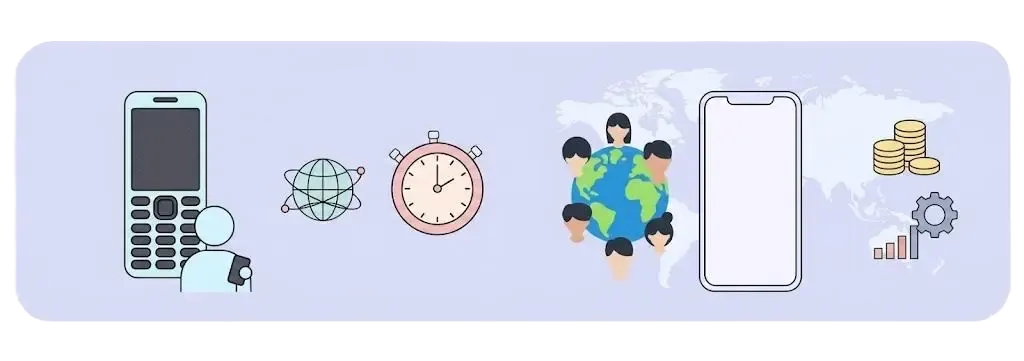
Here’s your quick answer:
- TracFone is best for simple prepaid mobile users who mainly need U.S. service and only make occasional international calls.
- BOSS Revolution is best for frequent international callers who want flexible, pay-as-you-go pricing and full visibility into per-minute costs.
The sections that follow break down pricing models, destination coverage, call quality, and real-world usage scenarios – so you can see which option actually saves you money based on how often and where you call.
Overview of TracFone Prepaid and BOSS Revolution
Although both services allow international calling, TracFone and BOSS Revolution are built on very different models.
TracFone Prepaid: A domestic-first mobile service
TracFone is a mobile virtual network operator1 (MVNO). That means it doesn’t have its own cellular towers. Instead, it operates on major U.S. networks like AT&T, T-Mobile, and Verizon. Users purchase prepaid plans that bundle talk, text, and data for a fixed monthly or multi-month price.
The platform is designed primarily for domestic U.S. use. The plans are built around simplicity to offer clear pricing, no contracts, and just the essentials for everyday mobile use. International calling is available, but it isn’t the main focus. On some plans, you might get a bit of international calling to certain countries; otherwise, you’ll need to add it on when you need it.
For users who call abroad on and off, TracFone’s bundled approach can feel simple and sufficient.
BOSS Revolution: Built for international calling
BOSS Revolution takes a different approach. It is app-based and relies on VoIP (Voice over Internet Protocol) technology to route calls over the internet.
Instead of bundling minutes into fixed plans, it follows a simple pay-as-you-go model. Users top up their balance and are charged per minute depending on where they’re calling.
This approach reflects how people actually make international calls today. Most cross-border voice calls3 now run through VoIP, largely because it’s more affordable and easily accessible through apps people already use.
Because rates are shown clearly before a call is placed, users know exactly what they’ll pay.
Key differences
At first glance, TracFone and BOSS Revolution may seem similar because both allow cross-border calling. In reality, they are meant to solve very different problems.
One is a traditional prepaid mobile service with international calling as a secondary feature, while the other is an international-first calling platform built around flexibility and transparency.
Understanding these structural differences is important because pricing, call quality, and overall value are shaped by how each service delivers calls.
Below is a side-by-side breakdown of the most important differences for international callers.
| Feature | TracFone | BOSS Revolution |
|---|---|---|
| Type | Mobile carrier (MVNO) | Calling app (VoIP-based) |
| Pricing | Monthly prepaid bundles | Pay-as-you-go |
| International calling | Limited, plan-dependent | Flexible, country-based |
| Best for | Basic prepaid users | Frequent international callers |
| Flexibility | Low | High |
| Cost transparency | Moderate | High |
| Internet requirement | Not required for calls | Required for VoIP calls |
Pricing models and international calling rates
Cost is where the difference between the two services becomes most obvious – notably for those who make international calls more than once in a while.
TracFone: bundled plans with limited international options
Tracfone works on a bundled prepaid4 setup. You pay upfront and get a fixed bundle of minutes, texts, and data to use over a set period.
Some plans do include international calling, but only to certain countries, and it’s often counted the same way as regular U.S. minutes. The catch is that it really depends on the specific plan, and the list of included countries is limited.
If the country you need isn’t covered, your options aren’t great:
- You may need to purchase an add-on
- You may have no international option at all
- You could employ third-party calling services
- Rates are not always clearly shown upfront
This structure works best when international calls are infrequent and short. Industry data shows that many prepaid users make international calls only a few times per month, which is why bundled plans remain popular for basic use.
The downside is efficiency. If you pay for a bundle that includes international calling but barely use it, you’re still paying for unused value.
BOSS Revolution: pay-as-you-go and rate transparency
BOSS Revolution uses per-minute pricing. You load credit and are charged based on:
- the country you call
- the type of number (mobile or landline)
Rates are displayed before you place a call. This level of transparency often matters. Telecom pricing studies consistently show that international carrier pay-per-use rates can exceed $1–$5 per minute5, while VoIP-based services often charge just a few cents per minute.
Consider these scenarios:
VoIP-based international calls with BOSS are commonly priced under 1.9¢ per minute.
If you plan to call to India, rates would be around 3.3 cents/min, even for mobile numbers.
This leads to an important takeaway: Pay-as-you-go is often cheaper for frequent international calls.
If you make multiple long calls each month, paying only for what you use almost always beats bundled plans with limits, exclusions, or hidden constraints.
Coverage & destination access
Coverage for international calling isn’t only about how many countries you can call — it’s also about how clearly you understand which destinations are included and at what cost.

TracFone coverage
TracFone relies entirely on U.S. cellular networks (as mentioned). International communication is available to hundreds of destinations, and some packages even allow users to call certain countries for the same price as domestic U.S. calls. This can be convenient for popular destinations.
However, TracFone does not always publish clear, country-by-country rate lists in a single place. You often need to check plan details or fine print to confirm which countries are included and which are not.
That lack of visibility can be limiting if you call multiple countries or less common destinations.
BOSS Revolution coverage
BOSS Revolution is global by design. It allows:
- Calling to 200+ countries
- International mobile top-ups for 280+ carriers across roughly 95 countries
- Clear, country-level pricing shown directly in the app
This transparency is a major advantage for users who call less common destinations or multiple countries regularly. You always know the cost before dialing.
Call quality and network performance
Call quality depends heavily on how calls are routed and what type of network is used.
TracFone is carrier-based. Calls travel over major U.S. cellular networks, including nationwide 4G LTE and 5G coverage for compatible devices. Typical 4G LTE download speeds range from 20–50 Mbps, which is more than sufficient for voice calls.
Because calls don’t rely on internet connectivity, call quality tends to be stable as long as a cellular signal is available. This reliability is a major reason traditional carrier calling still appeals to basic users.
On the other hand, BOSS Revolution uses VoIP, which means calls travel over the internet instead of traditional phone lines. Call quality depends on whether you’re using:
- Wi-Fi
- Mobile data
- Carrier minutes routed through the app
VoIP converts your voice into digital data and sends it over the internet to the person you’re calling.
What affects call quality
Call quality isn’t determined by one factor alone. It’s the result of how your network connection, environment, and device work together during a call – particularly for international and internet-based calling.
Voice calls don’t require high speeds, but they do need a stable connection. Frequent speed drops, high latency, or packet loss can cause delays, echoes, or choppy audio even if your internet is technically “fast.”
Strong Wi-Fi usually delivers clearer calls, especially on private or low-traffic networks. Mobile data quality can vary widely depending on signal strength, location, and network type (4G vs 5G).
Heavy network traffic during peak hours can reduce call quality on both cellular and internet connections, leading to lag, distortion, or dropped calls.
Older phones, low-quality microphones, damaged speakers, or outdated software can negatively affect call clarity regardless of network strength.
With a strong connection, VoIP calls can sound just as clear as carrier calls. With poor internet, the quality may drop.
Convenience & features
Convenience often depends on how predictable or dynamic your calling habits are.
TracFone offers:
- No contracts
- Simple prepaid plans
- Minimal setup
International calls are straightforward when included, but flexibility is limited. If your needs change - new country, higher call volume - options may be restricted.
Best case scenario: A prepaid user who primarily calls within the U.S. and makes only periodic international calls.
In contrast, BOSS Revolution is app-based and built for speed and control. The platform provides:
- Instant setup
- Easy credit top-ups
- No monthly commitment
Users can adjust spending in real time and call different countries without changing plans. Smartphone adoption supports this model well, about 75% of people6 in the world’s top 10 developed countries have a smartphone, making app-based calling highly accessible.
Best-case scenarios:
- A business traveler calling multiple countries monthly
- Someone supporting family overseas
- Users who want complete control over international calling costs
Is TracFone good for international calls?
TracFone can work for international calls, but mainly for sporadic use. Some TracFone prepaid plans include select countries, but coverage and cost depend heavily on the specific plan. It is not designed for frequent or long international calling.
Is BOSS Revolution cheaper than TracFone?
In many cases, yes. BOSS Revolution typically uses pay-as-you-go pricing, where calls can cost just a few cents per minute. By comparison, traditional carrier international rates can exceed $1 per minute.
What are the main differences between TracFone Prepaid and BOSS Revolution for international calls?
TracFone bundles limited international access into prepaid plans, while BOSS Revolution focuses entirely on per-minute international calling with transparent costs and broader destination support.
Can I use my own phone with these services?
Yes. Both services generally work with unlocked smartphones. TracFone uses a SIM-based service, while BOSS Revolution works through an app installed on your phone.
Is Wi-Fi required for international calling with either provider?
TracFone does not require Wi-Fi because it uses cellular networks. BOSS Revolution relies on the internet (Wi-Fi or mobile data) because it uses VoIP technology.
Which is more suitable for frequent travelers making international calls?
Frequent travelers often prefer BOSS Revolution due to its global coverage, flexible pay-as-you-go model, and ability to place calls from anywhere with internet access.
Conclusion
There you have it – BOSS Revolution vs TracFone review. Choosing between the two comes down to how often you make international calls and how much control you want over costs.
TracFone works best for users who want a simple prepaid mobile plan and rarely call abroad, more so to a limited number of countries. However, BOSS Revolution is built for frequent international callers who prefer pay-as-you-go pricing, transparent per-minute rates, and broader global coverage.
If your international calling is occasional and secondary, TracFone can be sufficient. But if international communication is a regular need – whether for family, work, or travel – BOSS Revolution typically offers better flexibility and cost efficiency.
Ultimately, the better choice depends on whether you value simplicity or global calling freedom more.
Sources: all third party information obtained from applicable website as of April 27, 2026
- https://www.cnet.com/reviews/tracfone-wireless-preview/
- https://tridenstechnology.com/prepaid-mobile-plan/
- https://voiphunters.com/voip-and-statistics-what-the-numbers-really-say/
- https://www.tracfone.com/phone-service-plans
- https://voyeglobal.com/pay-per-use-carrier-fees-cost/
- https://explodingtopics.com/blog/smartphone-stats
This article is provided for general information purposes only and is not intended to address every aspect of the matters discussed herein. The information in this article is not intended as specific personal advice. The information in this article does not constitute legal, tax, regulatory or other professional advice from IDT Payment Services, Inc. and its affiliates (collectively, “IDT”), and should not be taken or used as such by any individual. IDT makes no representation, warranty or guaranty, whether express or implied, that the content in this article is current, accurate, or complete. You should obtain professional or other substantive advice before taking, or refraining from, any action on the basis of the information in this article.
